

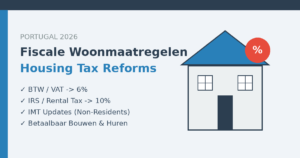
 Portugal’s real estate landscape is undergoing a major shift. With the publication of new fiscal legislation (Decreto-Law no. 97/2026), the government has introduced a comprehensive set of tax updates. The primary goal? To significantly boost the supply of moderately priced homes for both sale and rent.
Whether you are building, renovating, buying, renting out, or investing in Portuguese property as a (non-)resident, these new regulations might impact your financial planning. Here is a breakdown of the most important changes.
Key measures at a glance
The new decree-law reorganizes several tax benefits to favor permanent residency and affordable leasing. Here is a quick summary:
1. 6% reduced VAT rate on construction and renovation
One of the headline measures is the implementation of a 6% reduced VAT rate for specific construction or rehabilitation projects. This apply to properties intended for sale as permanent primary residences or for residential leasing, provided they meet strict criteria:
For renting: The monthly rent cannot exceed €2,300 in 2026 (2.5 times the minimum wage).
For selling: The sale price of the property cannot exceed €660,982.
Transitional Rules: If your project’s procedural initiative started between September 25, 2025, and December 31, 2029, you may still qualify, provided the VAT chargeability occurs after January 1, 2026.
2. Tax relief for landlords and tenants
To make the long-term rental market more attractive, the government is adjusting the IRS (Income Tax) framework:
For landlords: If you lease your property within the designated “moderate” price limits, your rental income will be taxed at an autonomous rate of just 10% until the end of 2029. For corporate entities (IRC) or individuals with organized accounting, only 50% of the property income will be considered taxable.
For tenants: Tenants will experience some tax relief as the maximum rent deduction allowed on the annual IRS tax return increases to €900 in 2026 and €1,000 starting in 2027.
3. Long-term incentives for real estate investors
Investors focused on building or rehabilitating properties for the residential rental market can now sign long-term investment contracts. These grant substantial tax exemptions for up to 25 years, including:
Full exemption from IMT and stamp duty upon acquisition of eligible land or buildings.
Up to 8 years of exemption from IMI (Municipal Property Tax), followed by a 50% reduction for the remainder of the contract.
A 50% refund on VAT paid for architectural, engineering, and design services.
4. Crucial: higher IMT for non-residents
If you are a non-resident buying residential property in Portugal (e.g., a holiday home or secondary investment), the property transfer tax (IMT) is now increased to a flat rate of 7.5%, and standard reductions or exemptions will not apply.
The Exceptions: The standard rates still apply if you become a tax resident in Portugal within two years of the purchase, or if you place the property on the affordable rental market within six months (maintaining it for at least 36 months).
Conclusion
The 2026 housing tax reform offers opportunities to optimize your tax burden in Portugal, particularly if you are involved in building, renovating, or providing affordable housing. However, because every benefit is tied to strict deadlines, price limits, and specific conditions, a careful case-by-case analysis is essential.
Are you preparing to make a move in the Portuguese real estate market? Make sure to consult with a professional to verify how these laws apply to your plans.
Disclaimer: The information provided in this blog post is for educational purposes only and does not constitute formal legal or tax advice. Always consult with a qualified specialist before making financial decisions.